
This temple dedicated to Lord Vishnu where he is portrayed as Sri Venugopala Swami merrily playing a flute with his hands. The temple is situated 5 kms from Kuringipadi town.
Interestingly, this is the only temple where it is said that Lord Rama is depicted as taking rest after the battle in Sri Lanka.
The temple was also documented as Sri Venkatapuram.
Sri Sathyabhama Badreenath, Superintending Archaeologist has catalogued this structure as a 15 to 16 A.D century temple. Further, the document says the earliest inscription is dated to 1776 A,D. mentioning the work of building of dharmasala by Muttu Vijaya Anandaranga Thiruventapillai of Pondicherry. As per the observations of British Historian John M. MacKenzie who had documented temples of South India, Venkatapathi of Venkatampettai ruled the Gingee region about 1478 A.D. The temple would have been built by Venkatamma, the sister of the king.
The legend says a rishi (saint) by name Sadamarshnar came to Southern India in search of peace. He reached the present day Thirukovilur which was called as Panchakrishnaranyam, roughly equivalent to jungle of Lord Krishna. The rishi reached the river Karuda presently known as Kedilam; followed the river and reached the northern end Thirthavanam and meditated.
One day Lord Vishnu arrived in a chariot; the chariot had Vedas as four horses, Thendral & Vadai (celestial breeze) as wheels, Brahma as charioteer accompanied by consort. The rishi wanted to see various avatars of The Lord and this was obliged by him.
Following the sight of the Lord Rama incarnation, the rishi wanted the Lord to take rest in that form over there. Hence, Adi Seshan became the bed, Sri Devi was at the feet, and with a cushion under the head, Lord Rama went into blissful sleep.
The entire sculpture is an 18 ft. single granite structure. In continuation, the Lord also took the form of Krishna with Govardhan mountain, but the rishi wanted the Lord to assume Sri Venugopala Swami along with Bhama & Rukkumami. This was also obliged by the Lord. Hence, Lord Vishnu is in two forms here - in the form of Lord Rama taking rest and as Sri Venugopala Swami.
The temple is to the east of the village and has a renovated compound. The main entrance is a 7-tiered structure. Near the entrance, is the Garudalvar shrine where the majestic bird deity is seen in padmasanam with yoga mudra; a snake is depicted on left hand with its hood raised over the thigh. Padra kundalam adorns the ear - this form of sculpturing indicates that it belongs to the Naiker period.
The sanctum is guarded by mighty Thwarapalaka, the celestial gate keepers. Lord Venugopala Swami with the consorts Bhama & Rukmani is seen as giving blessings.
In the chamber before the sanctum on the northern corner, Lord Vishnu is seen seated in Padmasana yoga posture.
Sengkamalavalli is the name of Goddess Lakshmi present in a separate chamber facing south. She is again in the padmasana posture.
There is a separate house for Andal, behind the main chamber. Lord Rama is seen is depicted as a warrior taking rest on the seven- hooded Adhi Seshan.
At his feet both the Nachiars and Veera Anginaier are seen. Lord Rama is without his crown. He is resting on a rounded cushion with his feet resting on a lotus. Adhi Seshan is seen as having spread out his hood.
The legend says 7 celestial creatures viz. Karkodan, Padhman, Mahapadhman, Sangabalakan, Kulikan, Devaduthan and Sanjian became one Adhi Seshan.
A full-fledged kitchen (madapalli), is situated to the left of the main entrance. This has its own water source as a well; also there is another well for temple rituals at the northern side.
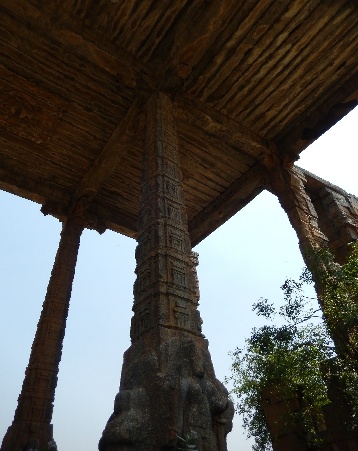
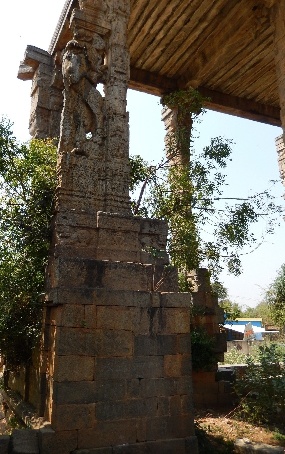
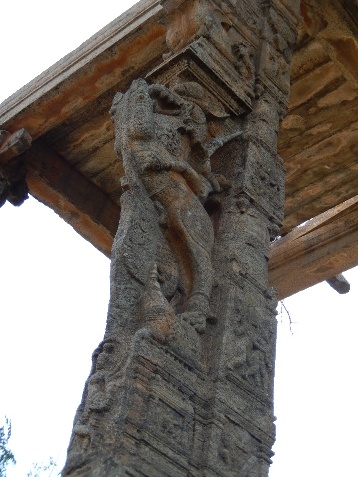
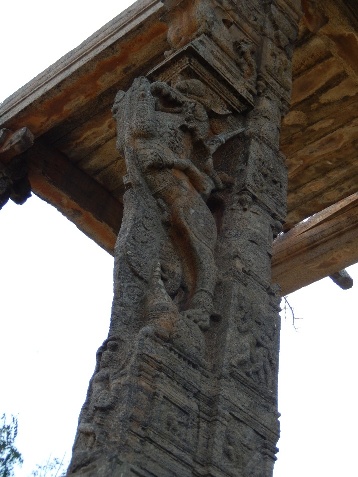
About 15 metres from the temple facing the entrance is the swing chamber - open on all sides, but crumbling. The structure is a wonder with various engraved sculptures. The entire granite structure is nearly 15 mts. in height.
On the north-eastern corner of the above structure a well-named Sakkara Keni exists; this is supposed to have been created by Lord himself with his wheel-weapon.
To the south of the temple is a 1 acre temple tank. The tank has 7 wells and a masonry is supposed to be housing the mortal remains of the architect of the temple. Rays of the sun and the moon are supposed to fall on both the main deities.
A beautiful temple but due to neglect and ignorance, is in a very poor shape. Vandalism exists everywhere. The beautifully sculpted pillars are used to tie ropes; every visitor writes on the wall and there is no one to monitor this. The entire temple is in an extremely broken-down and dilapidated state.
This temple was brought to my attention in 1993 by Late K. Krishnaswami, Medical Laboratory Technologist at RMMC&H Annamalai University. The temple, at present is being renovated by Siva Sri Arumuga Bhaskara Kurukkal Swami who is in Germany and he is going that extra mile to preserver this heritage. Mr. K. Krishnakumar is looking after the temple administration.
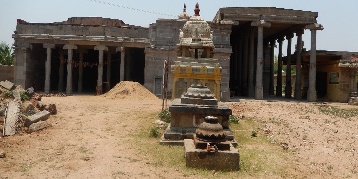
Main entrance of the Sri Venugopala Swami shrine.
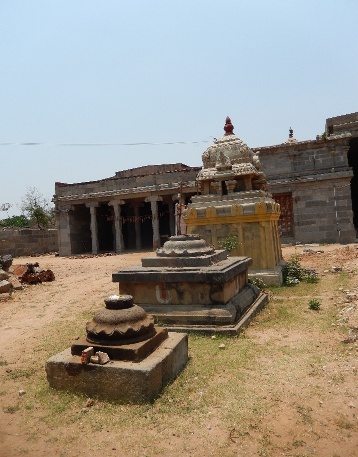
Chamber housing Garuda
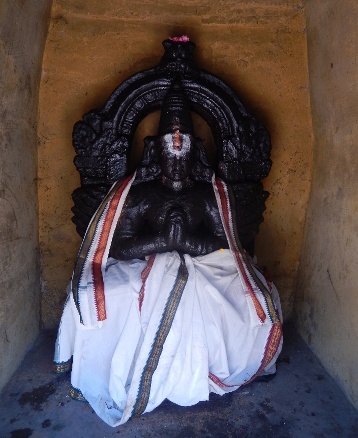
Garuda in Padmasana Pose
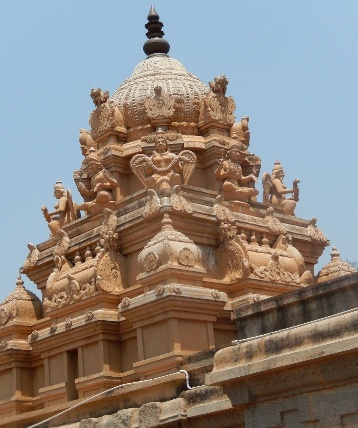
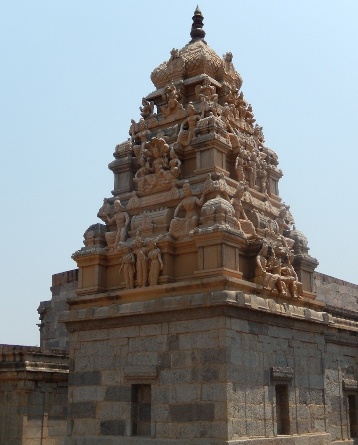

Other shrines behind the main structure.
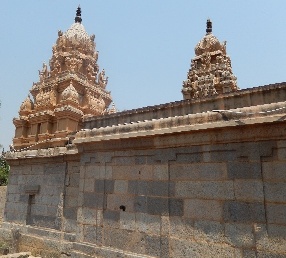
View of the main shrine.
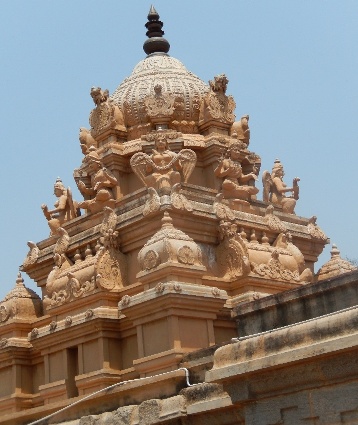
View of the main shrine.
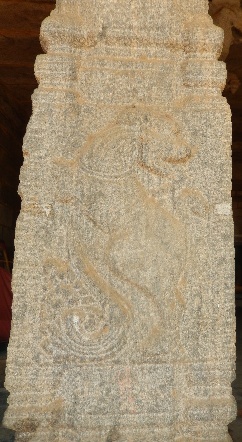
ORNAMENTAL PILLARS IN THE VARIOUS PARTS OF THE TEMPLE
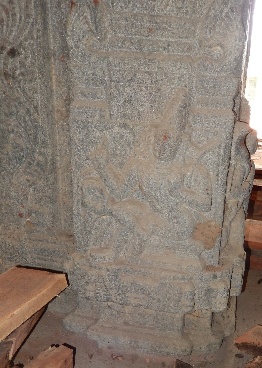
Various sculptures sculpted in the pillars.
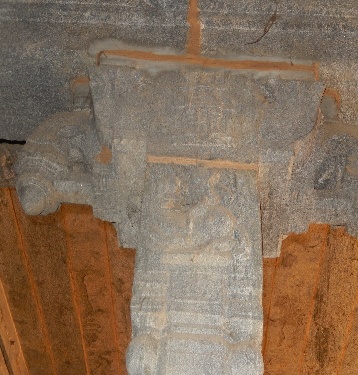
Various sculptures sculpted in the pillars.
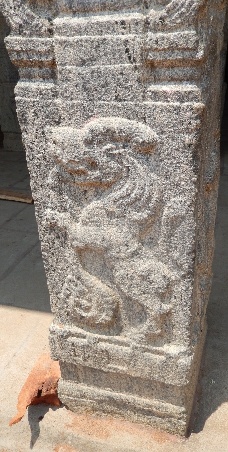
A Yali cub.
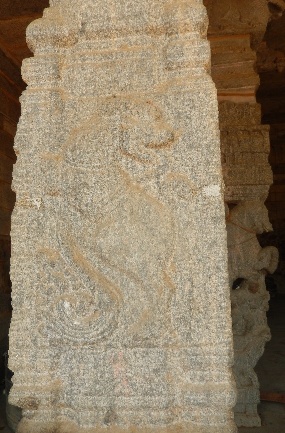
Close-up : a Yali cub.
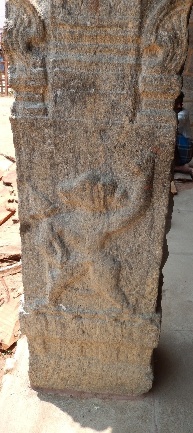
Hanuman.
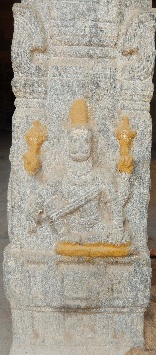
Narasimhan - Yoga Pattai a stringed cloth used in yoga posture.
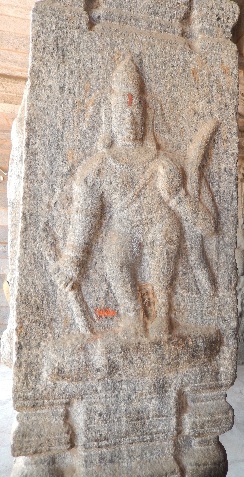
Lord Rama with bow & arrow.
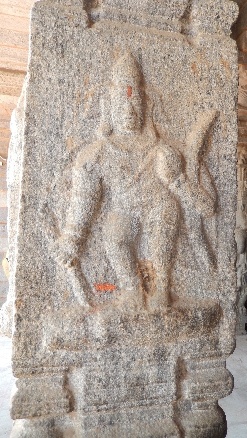
Lord Rama with bow & arrow.
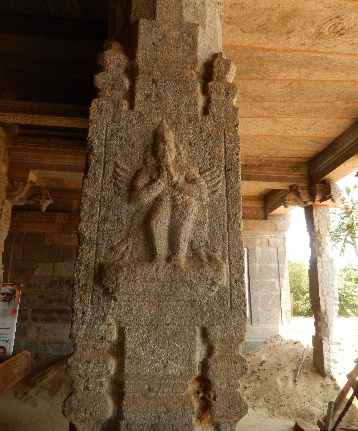
Garuda worshiping in Namaskara Muthirai.
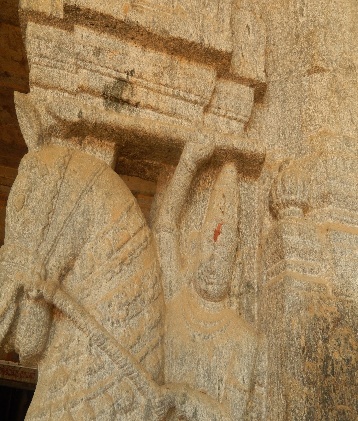
Warrior on horse.
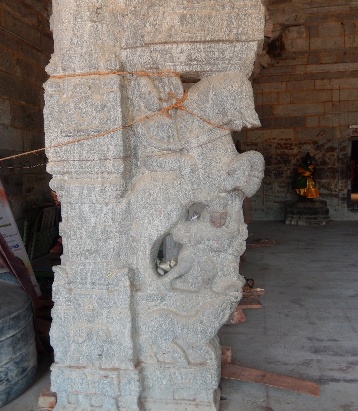
Warrior on horse.

Warrior on horse - The weapon system, anatomy of the horse, armour and dress of warrior come out in clear detail
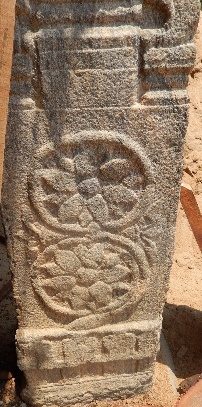
Floral design
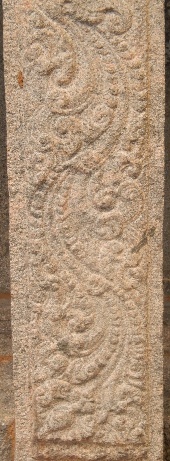
Floral design
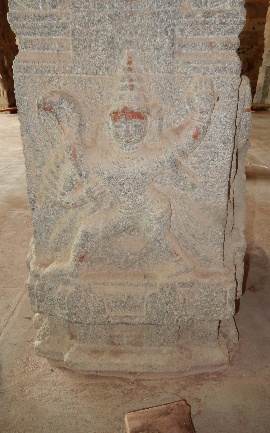
Ornamental pillars with various figurines & design.
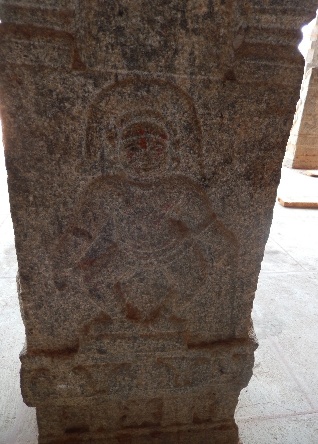
Ornamental pillars with various figurines & design.
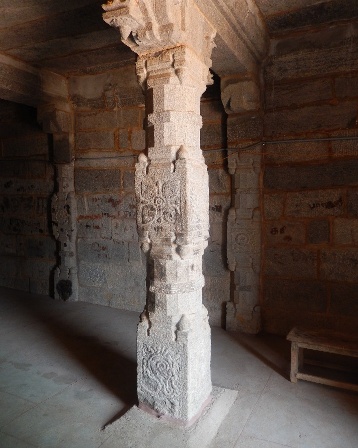
Ornamental pillars with various figurines & design
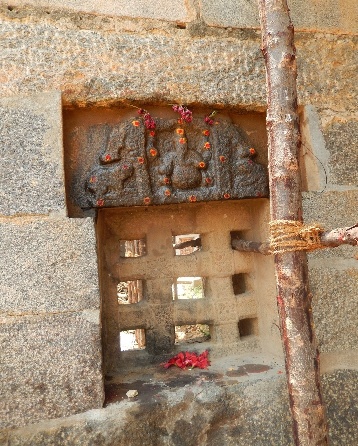
A granite window with Lord Ganapathy portrayed
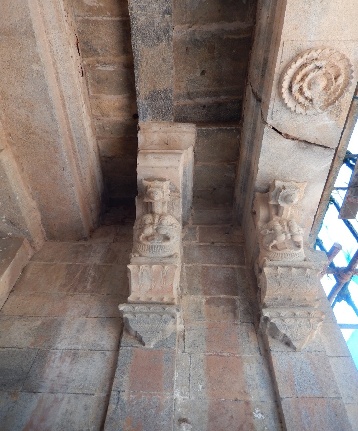
Ornamental pillars with various figurines & design

Ornamental pillars with various figurines & design

Ornamental pillars with various figurines & design
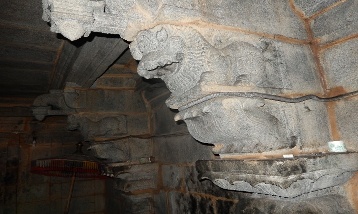
Ornamental pillars with various figurines & design
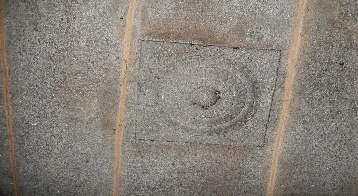
Ornamental pillars with various figurines & design

Ornamental pillars with various figurines & design
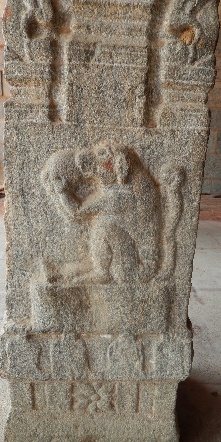
Monkey enjoying a fruit. Mango, perhaps?
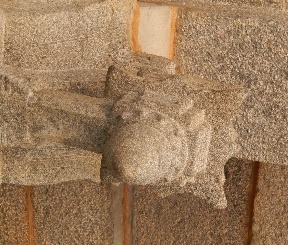
Design at the head of the pillar.
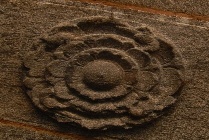
Thousand petal lotus in the ceiling

A member of the royal family would have been probably involved in the making of the temple since it depicts the worshipper with folded hands, typical of the Naiker period.
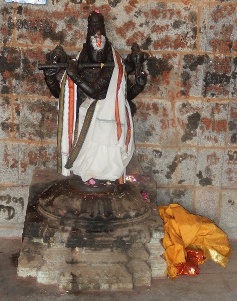
Sri Venugopala Swami similar to the one in the main sanctum.
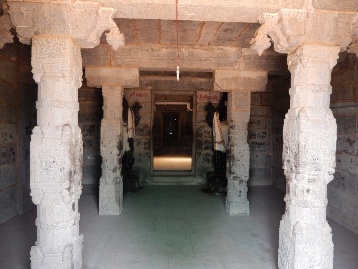
Dhwarapalakar at Entrance of the main Chamber
Main sanctum guarded by celestial warriors.
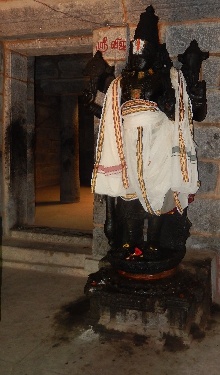
Sri Vijayan
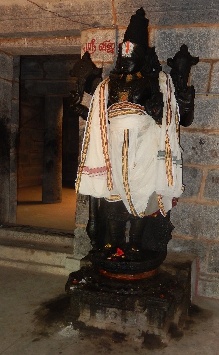
Sri Vijayan
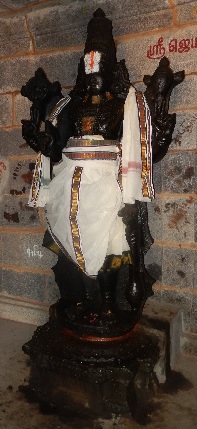
Sri Jayan
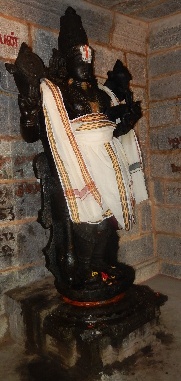
Sri Jayan
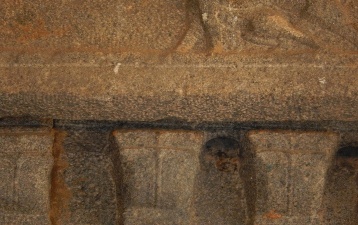
Sculptures near the ceiling

The hunt

Lord Narasimhan emerging from the pillar.
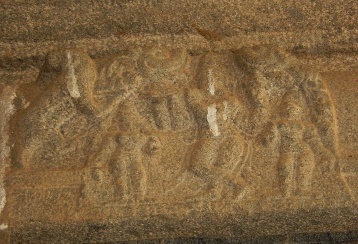
Sri Venugopala Swami with consorts as seen in the sanctum.
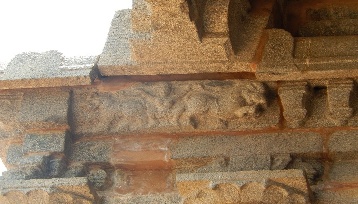
A lady with two yallis.
The swing hall - in a crumbling state
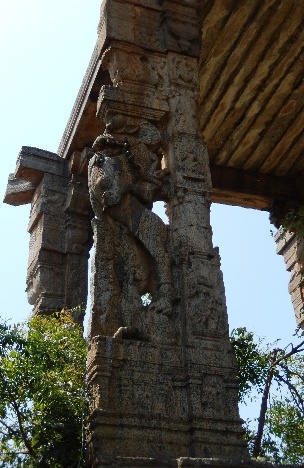
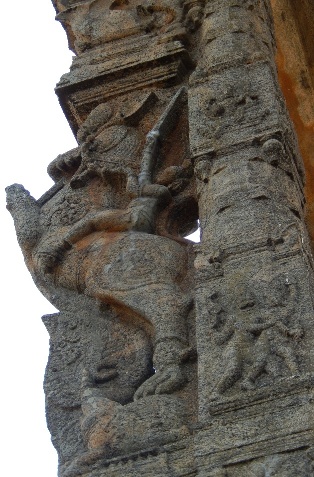
The pillars are actually kept in a position of grate balancing act. Each pillar contains innumerable sculptures and figurines depicting stories and short anecdotes, etc. in their own way. The pillars are similar to the later Chola period. Most of the pillars have a yalisculpted on them. A yali, also known as Vyala or Vidala in Sanskri, is a mythical creature often portrayed as part lion, part elephant and part horse, and in similar shapes. Also, it has been sometimes described as a leogryph (part lion and part griffin with some bird-like features). Some even say it morphed into the dragon which is popular in Chinese mythology.
A yali is a motif in Indian art and it has been widely used in south Indian sculpture. Descriptions of and references to yalis are very old, but they became prominent in south Indian sculpture in the 16th century. Yalis are believed to be more powerful than the lion/tiger or the elephant.
The dress, pieces of jewelry, weapons used and the postures are very interesting and have been admirably sculpted by the artisans of the yonder years.
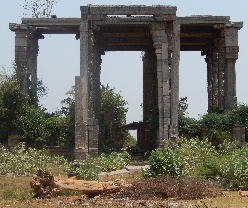
The swing hall in a crumbling and dilapidated state.
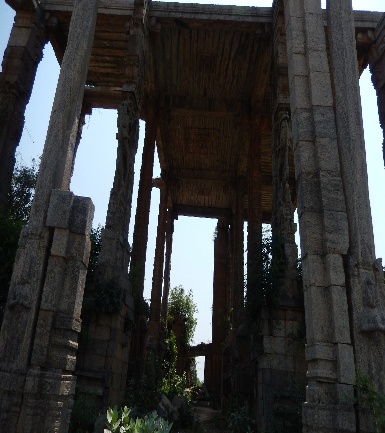
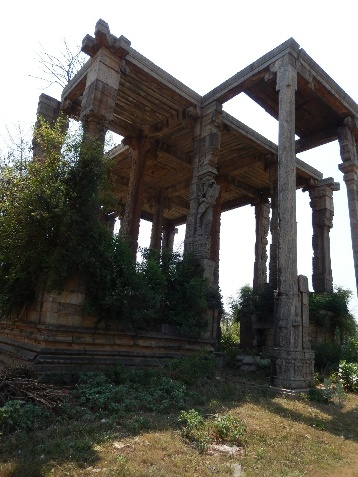
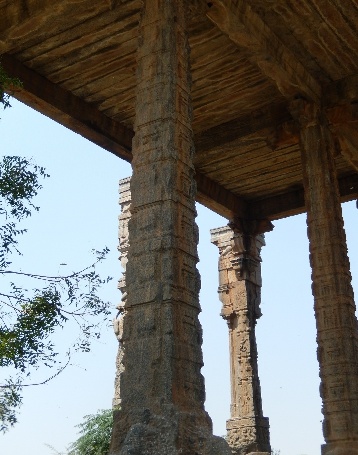



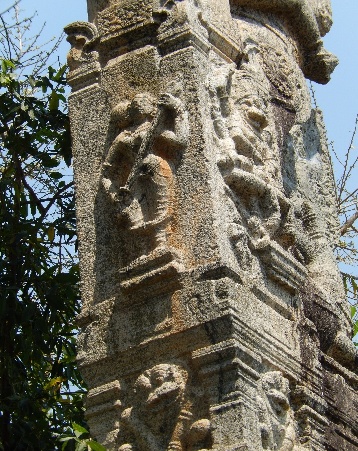
Lady with the stringed instrument - Thunthubi
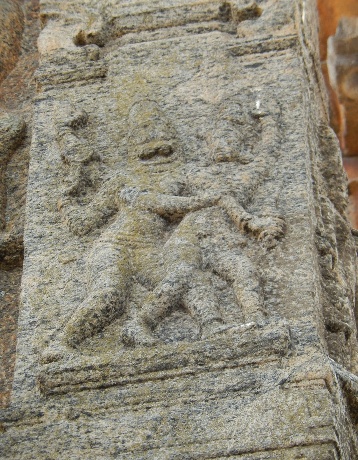
Lord Narasimhan fighting Hiranyakasibu
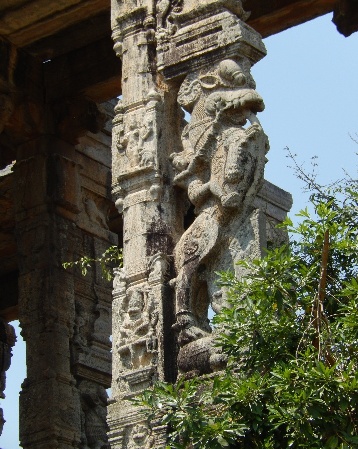
Warrior on Yali - Lord Narasimhan bringing out entrails of Hiranyakasibu.

A fighting scene with short swords. The sword, shield &the stance are worth a study.
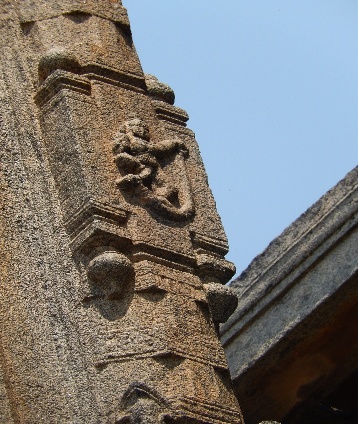
Lord Krishna dancing after vanquishing Kalingan.
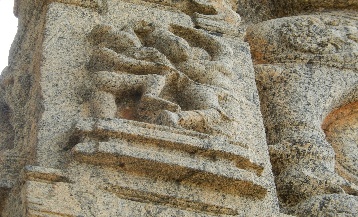
Disrobing of Draupadi
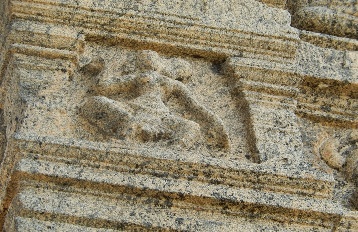
Dance pose
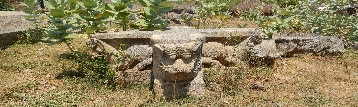
Fallen statues.
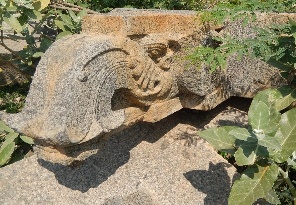
Fallen statues.
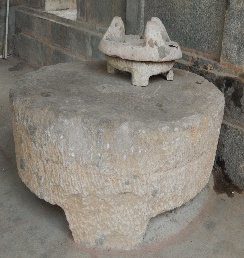
Grinding stone.
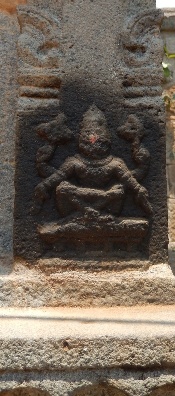
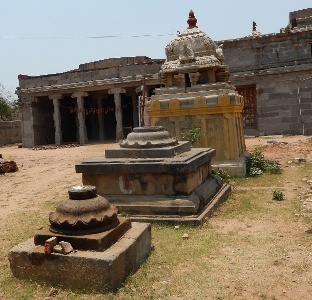
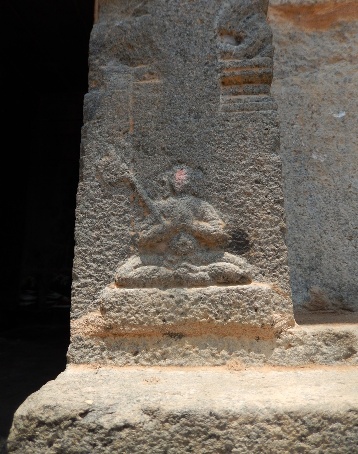
Sculptures on the wall of the chamber housing Alwars.
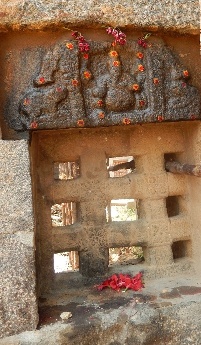
Monolithic window panels
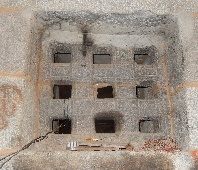
Monolithic window panels
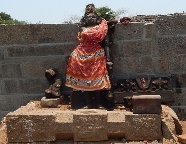
Sri Andal