
Thiruthinai Nagar also called as Thirthanagiri is a beautiful agricultural village situated on the Cuddalore ---Chidambaram high way almost equidistant from both the towns.
The railway station is Alappakkam which is on the Chennai---Tiruchy main line where both Cuddalore ---Chidambaram are the nearest junctions.
The Siva temple is located amidst lush green fields fed by clean live streams. This particular shrine finds a place in the holy text SIVA RAGASYA. The place was known by several names during different YUGA.
> GIRUDHA YUGA& THIRUDHA YUGA - depicted as ONGARAPURI
> THUVAPARA YUGA - known as THESAPIRATHAM
> KALI YUGA - it is GHANAPIRATHAM
In all the four YUGA the name Thiruthinai nagar was also known. This place is having a link of sorts, as this LINGAM is a prototype for the other temples from KASI to KANYAKUMARI. The Lord in the form a LINGAM which is to have originated on its own-----SUYAMU where AUVUDAIYAR is square shaped. The LINGAM originated from earth & the base could not be reached-for more than 100 feet down ;probably there is a hillock in that region ,the peak / summit of which is transformed as SIVALINGAM.
The history of this sacred place was told to UMA by SIVA as per scriptures of the Holy SIVA RAGASYA .At that time Lord SUBRAMANIAN heard and retold the same to sage AGASTHIAR; the sage in turn compiled & documented as SIVA RAGASYA.AGASTHIAR was a SAIGIDA YOGEESWARAR who compiled nearly a lakh KIRANTHAM in to 12 ANGISHAM. (Part of which is available in the Connemara library. Thiruchendur Malaimarundhu descendant Kumara Malaimarundhu had written the same in Tamil.
The Lord is variably called:
1.SIVAKOLUNDEESWARAR
2.SIVANGURESWARAR
3.PIRANAVA PUREESWARAR
The Consort is known as:
1.KARUNTHATTAKANNI
2.NEELATHALAMBIGAI
3.PIRANAVA PUREESWARI
The sacred tree is SARAKKONDRAI
The water body four in no. namely
1.JAMBHAVA
2.GOWRI
3.GARUDA (PERUMAL LAKE)
4.DEVA (BAY OF BENGAL)
Other stories & incidences related to this place:
1. Maha VISHNU worshiped for three days; obtained a celestial power namely VAYAM & killed a demon called MURASURAN, hence VISHNU known as MURARI.
2. Sage BIRUNGI who was cursed by Sage DHURWASA did penance here for 30 days & got the same corrected.
3. GARUDA worshipped here & brought AMIRTHAM the holy Nector which he gave to his mother.
4. Sage JAMBAVAN who during the period of Lord RAMA along with the entire clan,came here after the war& subsequent anointment of RAM as king as holy bear .
5. Bengal King VISUBANIRUBAN was purified of his Brhamhathi curse
6. His son King VEERASENAMAHA renovated & added additional structures; he stayed here for three years.
The original temple built by Bengal kings had three corridors with walls & four towers; they were destroyed by invaders during Arcot wars. (Some of the broken icons are seen even today).During the war the bronze sculptures were kept hidden in the various water bodies & retrieved later.
King Verasena during his campaign noticed a strange happening. His horse & dog who had certain skin disorder got cured on bathing in the water bodies around. The realized that water & the Deities in the temple possess curative power.
The king himself was suffering from Leckoderma & the same was corrected in the similar way like his animals. The king as a tribute renovated the temple complex & enhanced the water bodies.The figurine of King VEERASENA is kept along with the Four Saiva Sivachariars viz .SUNDARAR, APPAR, MANIKKAVASAGAR & THIRUGANASAMBANDAR in the left of the main shrine.
REASON FOR THE NAME THIRUTHINAI NAGAR
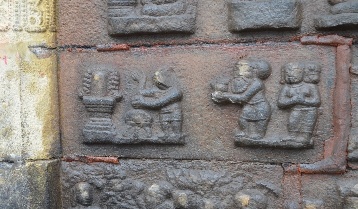
The story goes like this: A farmer who was an ardent SIVA devotee who used to feed all the followers Lord SIVA. In the bargain he became poor but still he continued to feed at least one devotee every day before he & his wife eats. Since he lost the property he himself started tending the fields. One day at the field The Lord came in the guise of an ascetic (SANGAMA ROOPA) and asked for food immediately as HE cannot tolerate hunger. The farmer gave some of the seeds in hand & said to eat that till he brings food from home. The ascetic took shelter from scorching sun under a tree. (The same tree is alive till date & can be seen at a corner of the temple) At home there is nothing as well. But his intelligent wife took some of the grains indented to be used as seed & cooked .When the farmer reached the fields to his surprise the entire field was covered by fully grown ripe plants with grains. The plants were appearing like paying obeisance to the Lord; there was happiness everywhere.
The farmer & his wife understood that the SIVA Himself had descended as in the place where the farmer was sitting a SHIVLING existed. As on the same day the entire process of farming was executed including obtaining the grains the village came to be known as THIRUTHINAI NAGAR. Latter the entire family of the farmer attained the abode of Lord SIVA.
About the temple:
The main gopuram is three tiered.
The mast / post is covered fully with engraved copper plates.
THE TEMPLE HAS NANDHI & PALI PEETAM
During the Tamil month of PUNGUNI Sun rays fall on the deity probably getting reflected from the NANDHI on 25, 26 & 27(this approximately correspond to April second week ). This explains several other subsequent events .The Sun moves to 12 Almanac starting from Mesham i.e. Aries and ends in Meenam I.e .Pisces ,after which a new year calendar begins. The Sun worships the Lord Shiva before the start of a new year. The Tamil New Year, probably for this reason, is fixed on the 1st of the Tamil month Chithirai when the Sun enters the Mesham for the next cycle.
The shrine of the Goddess is located on the left of the mast as one enters the temple. The temple also has separate shrine for Lord GANESA, Lord SUBRAMANIAN & a platform with NAVAKRAHAS.
The information was provided by Mr. Manikandan, the priest of the temple.The temple is being maintained very well by him. The author also wishes to acknowledge the guidance of Mr. Yoga Siva; Computer work by P.Ranganathan.
A photograph taken when nearing the temple
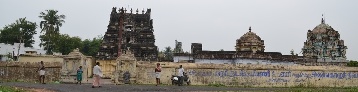
TEMPLE ENTRANCE
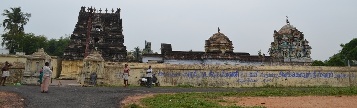
TEMPLE ENTRANCE
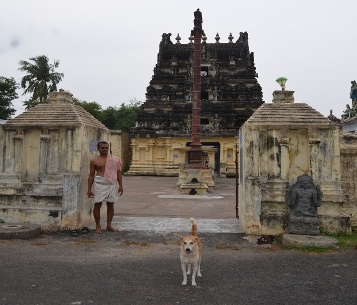
TEMPLE ENTRANCE
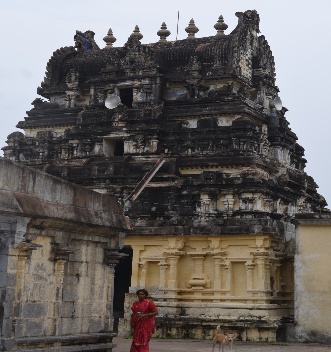
TEMPLE ENTRANCE
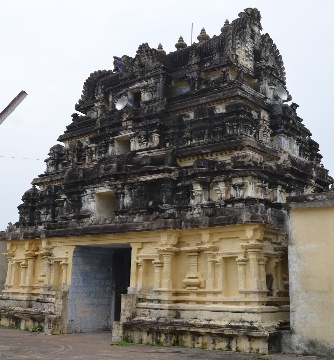
TEMPLE ENTRANCE
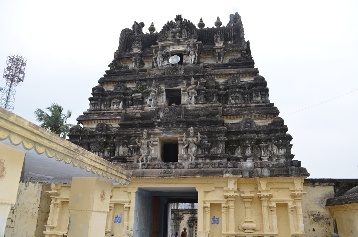
TEMPLE ENTRANCE
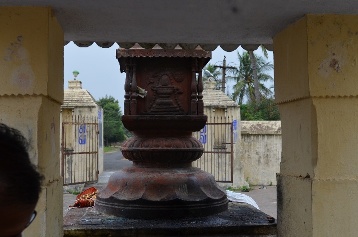
Base of the mast covered with copper plates. The base is in the form of a multi pettaled lotus in an inverted form. The sculpture is Mahalinga form of Lord SHIVA.
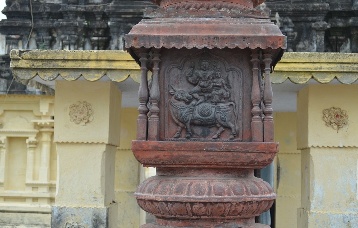
The Lord Shiva with His consort UMA on the celestial bull NANDHI. To note the hands of the Lord around the waist.
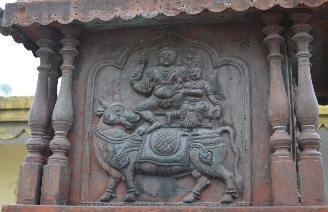
The Lord Shiva with His consort UMA on the celestial bull NANDHI. To note the hands of the Lord around the waist.
Raja Gopuram - the main three tiered tower at the entrance.
The tower traditionally never had any sculptures; but during the last renovation two figurines on standing postures had been incorporated.
The main mast is fully covered with copper plates which contains engraved sculptures.
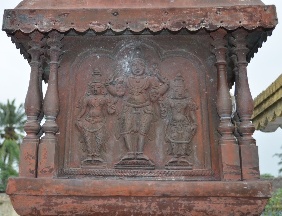
Lord MURUGAN with His consorts DEVA SENA & VALLI, the latter depicted in a simpler way. Lord MURUGAN is having weapon system similar to Lord SHIVA

Lord GANAPATHY with dwarfs who have offerings on their head.
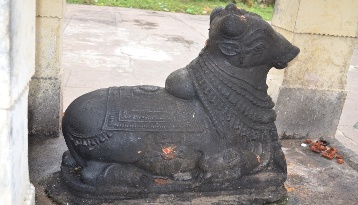
NANDHI
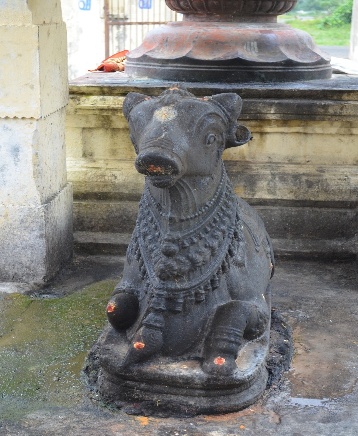
NANDHI
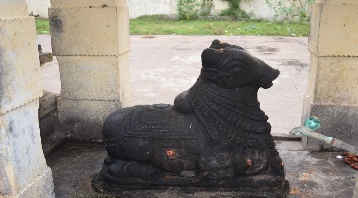
NANDHI

NANDHI
The sacred bull NANDHI is sculpted & positioned in such a way that the tail deflects the sun rays through the ornamental granite window to fall on the SHIV LING during the Tamil month of PANGUNI for three days -25,26 & 27.
The story is that the Lord SUN Himself is supposed to worship on those days.

NANDHI
 Granite Window made of single piece of stone. The rays of the sun travels through the window to reach the Lord. The rays pass through a 12 pillared hall depicting the ZODIAC signs.


Window pelmet with holes to put curtains
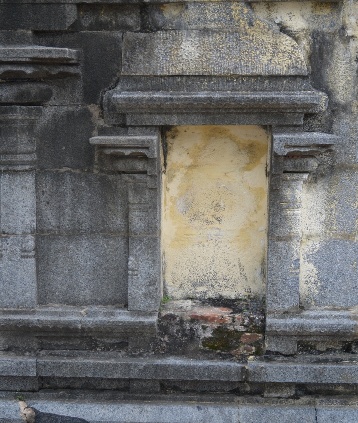
Lord Sudharsan, also known as Chakrathalwar, the destroyer of all evil. The sick and infirm worship Sri Sudharsan.
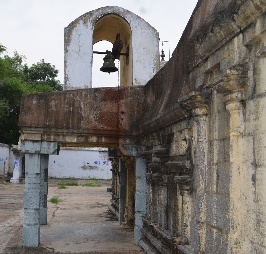
Four pillared stone mandapam ----entrance to the shrine. This chamber leads to a pillared hall which in turn becomes the passage to a 12 pillared chamber depicting 12 zodiac signs.
The four pillared passage way is used to make flower garlands & other floral decorative. Pieces for the various icons. The chamber is known as Flower Mandapam.

Woman with flowers

SHRI VINAYAGA

Dwarfs carrying the offerings

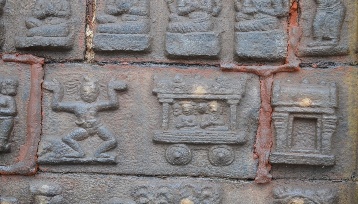
A Lock used in Indian wrestling
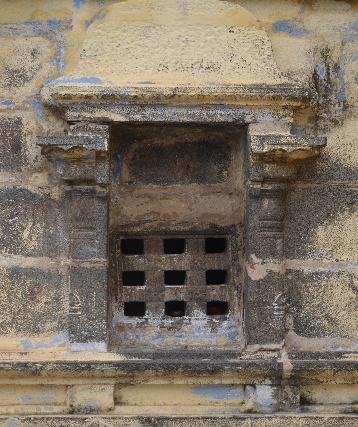
A window panel
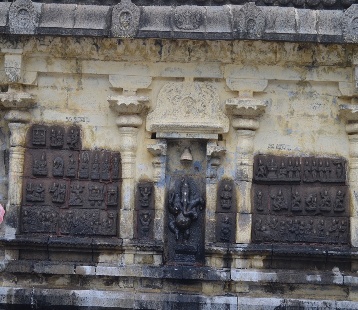 Lord GANESA in dancing posture as a Devakoshta statue. The panels on either side shows dwarfs with offerings. Lord GANESA has an umbrella above Him. On farther Side panels depict the story of the temple.
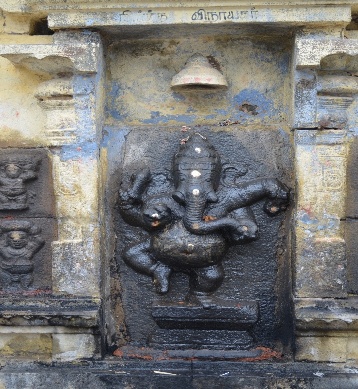
Lord GANESA in dancing posture ( Nirtha Ganapathy ).The sculpture is kept in such a way that rains will not soak the deity however severe it may be.(one can perhaps understand the usage of the umbrella).
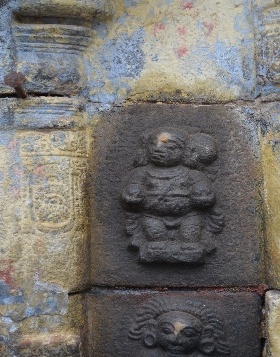
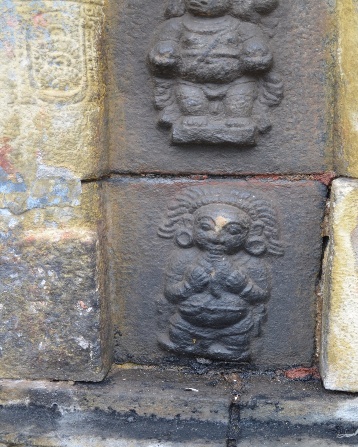

Dwarfs on either side of GANESA
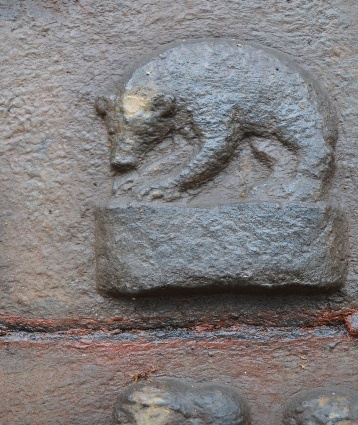
JAMBAVAAN
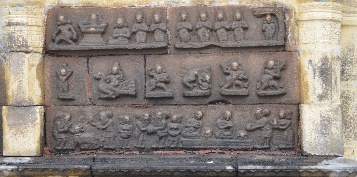
Panels depicting the story of the temple.
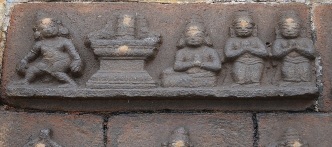
Lord SIVA in the form of MAHALINGAM being worshiped.

Lord SIVA in the form of MAHALINGAM being worshiped.
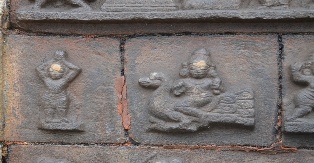
Lord MURUGA on His peacock mount worshipping.
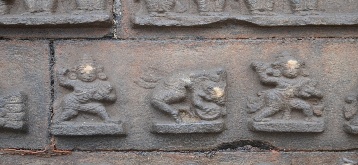
Ardha Sethubhandha Asana & a warrior on farther end.
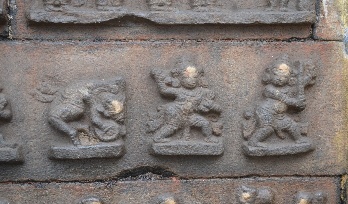
Ardha Sethubhandha Asana & a warrior on farther end
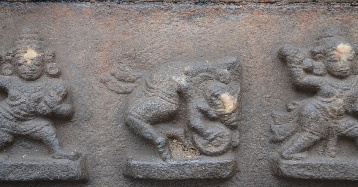
Ardha Sethubhandha Asana & a warrior on farther end.
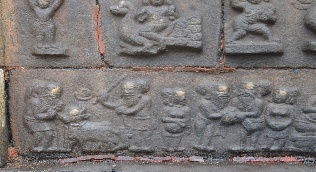
The farmer tilling the fields & Sivachariar asking for food
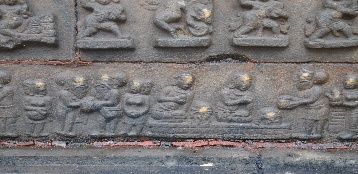 The farmer gave him some grains to eat so that he can go home to fetch some cooked food. The wife of the farmer cooks the grains intended to be kept as seeds.

Cooked food given to the farmer.
 SIVA & PARVATHY being worshiped
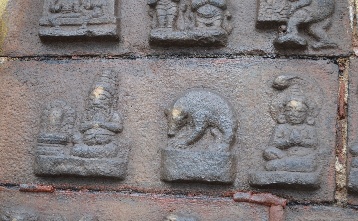
MAHALINGAM being worshiped. JAMBAVAN in the form a bear. SUKRIVAN Worshiping.
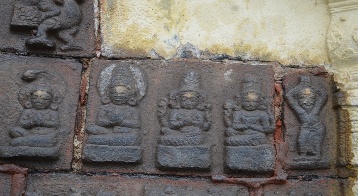
SUN worshiping.
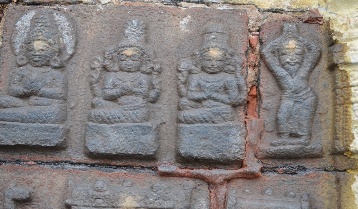
SUN worshiping
Lord Narasimhan getting hold of Hiranyakashibu, the Demon king.
Lord Vishnu.
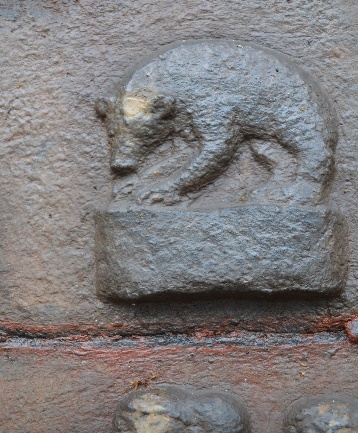
JAMBAVAAN in the form of a bear.
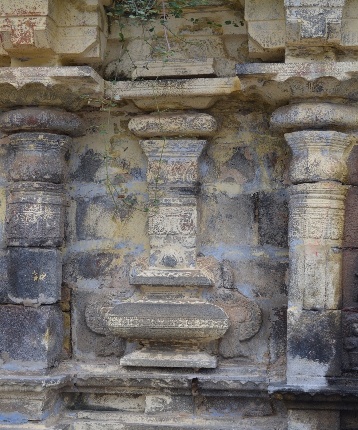
An ornamental panel
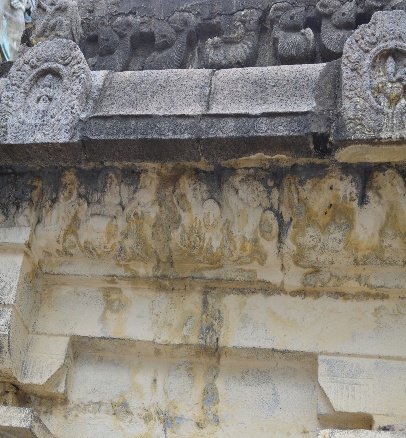

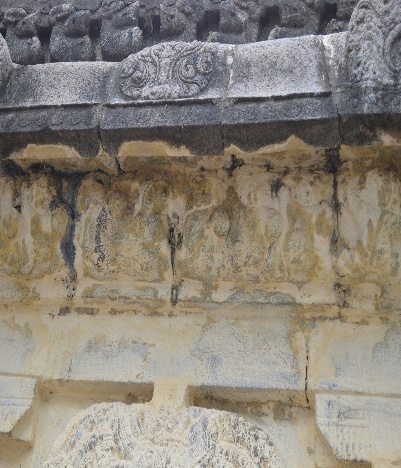
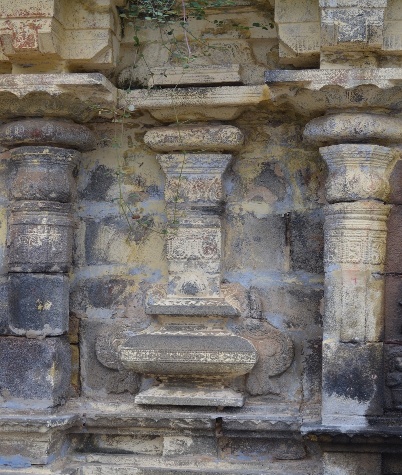
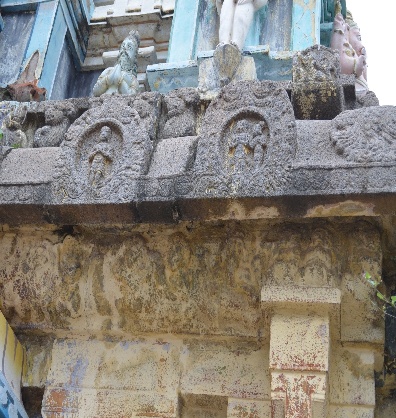
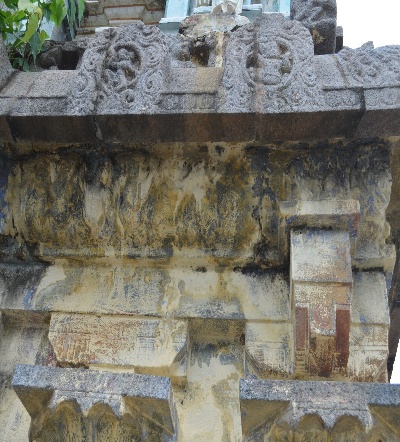
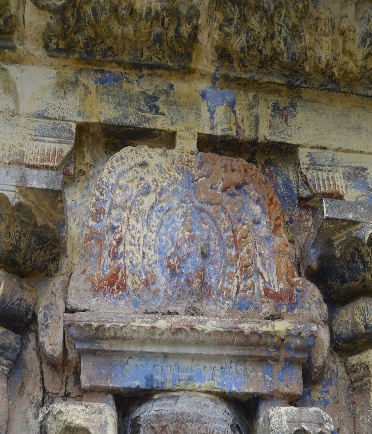

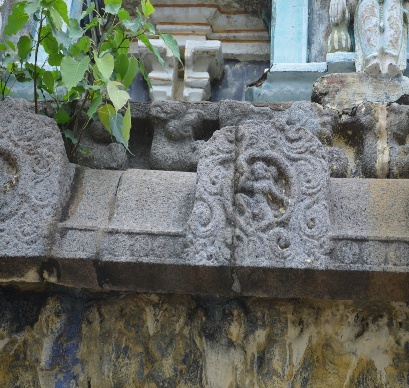 Panels near the ceiling
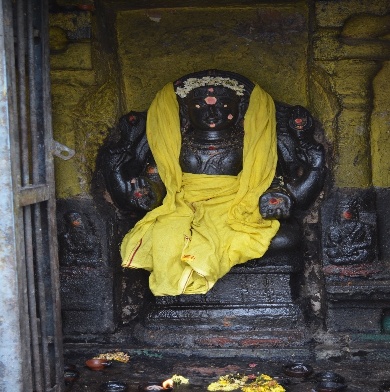
Lord DAKSHINAMOORTHY in PADMASANA
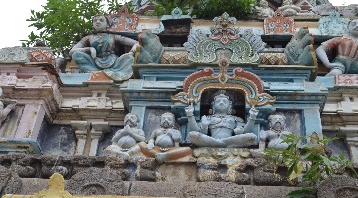 Lord DAKSHINAMOORTHY in PADMASANA (Traditionally the Lord is portrayed in RAJA ASANA)
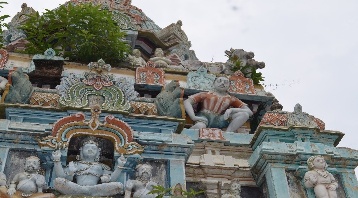 Sculpture in the tower in half pants & slack shirt-influence of the British
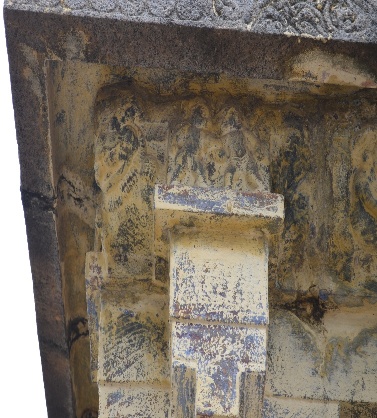
Vaali vs Sukhrivan-wrestling
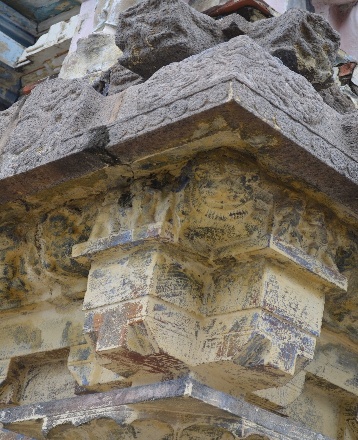 Yali
Yali
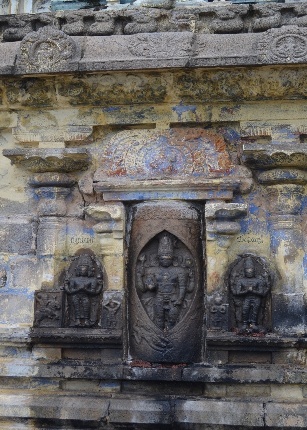
Lord ANNAMALAIYAR flanked on either side by Lord BRAHMA & Lord VISHNU
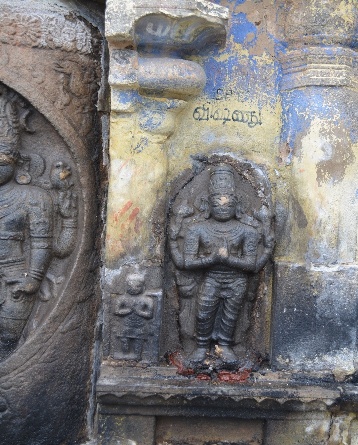
Lord VISHNU
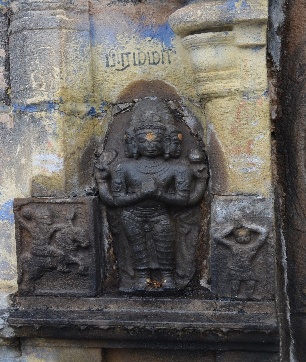
Lord BRAHMA

King of Bengal

Lord BRAHMA

Lord BRAHMA on the tower.
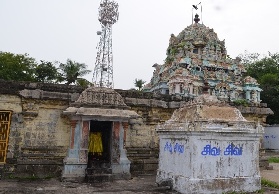
View from Northern side, Lord DURGA as koshta statue. In the fore front CHANDIKESHWARA shrine is present.
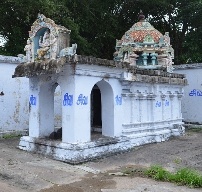
Shrine of Lord GANAPATHY.
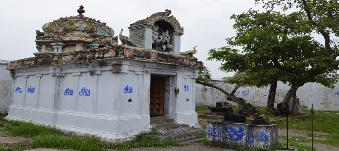
Shrine of Lord MURUGA
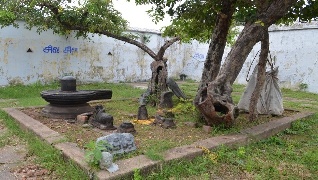
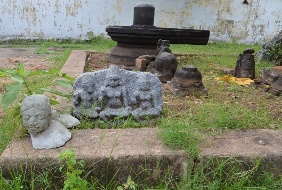
The field which was tilled by the farmer. & Temple tree – sarak-konrai
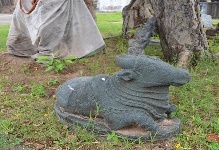
The SHIVLINGAM & NANDHI
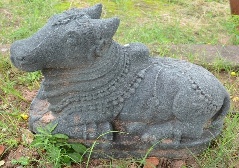
A beautifully sculpted NANDHI
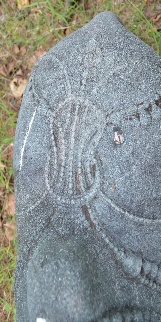
The ornamental knot at the back of NANDHI(BRAMHA MUDICHU)
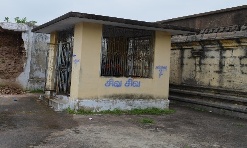
The NAVAKRAHA sannathi (shrine)
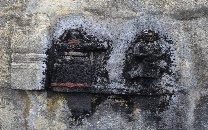
MAHALINGAM & Rishi MARKANDEYA sculpted on the wall
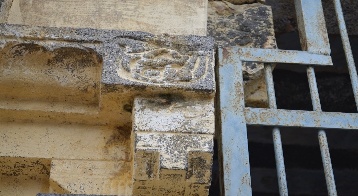
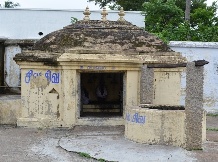
Shrine housing the four Saiva saints & GOWRI thirtham in the front
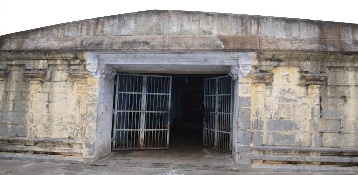
Entrance to the main shrine
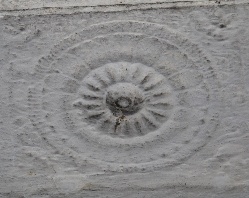
Sculpture on the ceiling. A thousand pettaled lotus.
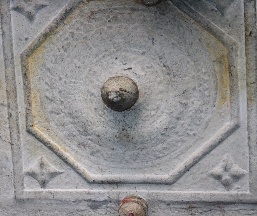
Lotus –a thousand pettaled one enclosed in an octogen.
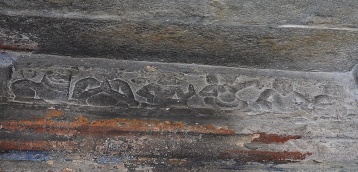
Sculptures near the ceiling inside the entrance to the main shrine
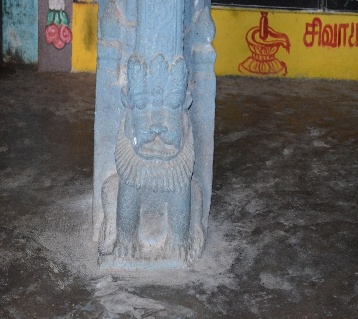
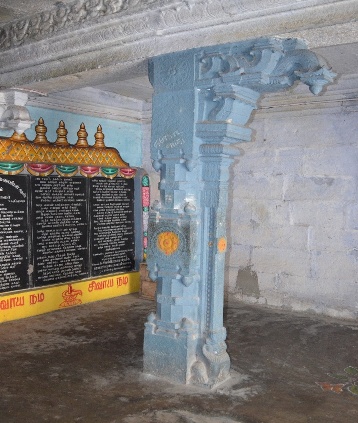
Pillars in the hall before the main sanctum; these pillars are often called simha thoon as the have shape of a lion at the base.
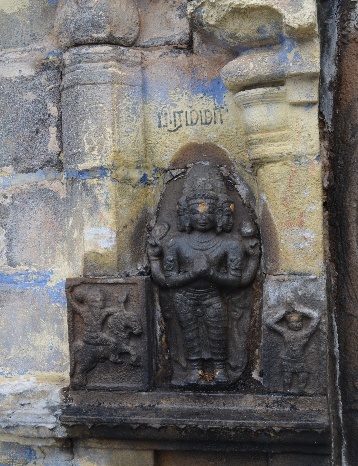
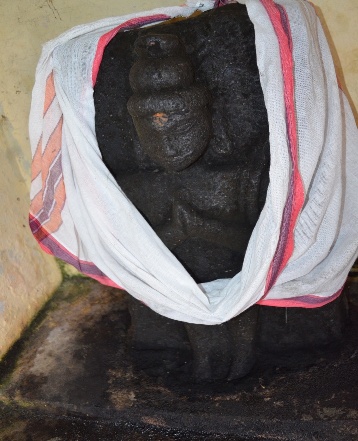
King Veerasena

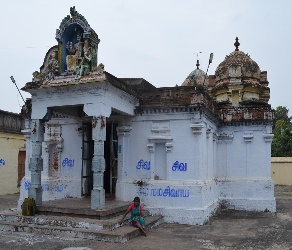
Shrine of the Shri KARUNTHADAKKANNI the consort of Shri SIVAKKOLUNDHISHVARER.
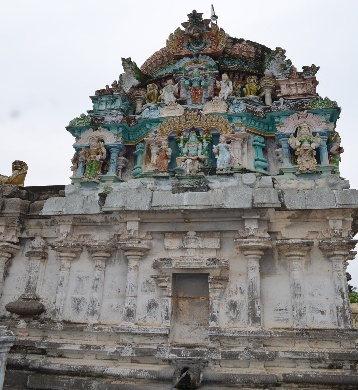
Shrine of the Shri KARUNTHADAKKANNI the consort of Shri SIVAKKOLUNDHISHVARER.

Shrine of the Shri KARUNTHADAKKANNI the consort of Shri SIVAKKOLUNDHISHVARER.

Painting on the wall inside above shrine.
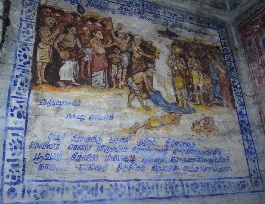
Painting on the wall inside above shrine.
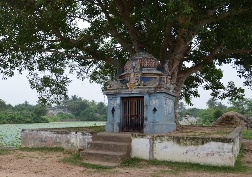
JAMBHAVA thirtham (the water body created by JAMBHAVAN)

JAMBHAVA thirtham (the water body created by JAMBHAVAN)
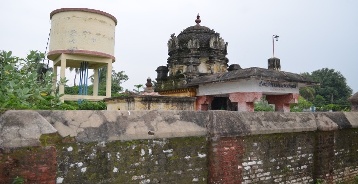
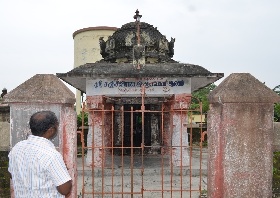
Shrine of Lord HANUMAN & SANJEEVI.
THE INSCRIPTIONS IN THE TEMPLE
The author Kavingar koo. Pitchai Pillay in his book titled Nadunattu Koilkall
i.e. Temples of Central Tamil Nadu ---Vijaya Publishers Ulundurpet - mentions
Various inscriptions present on the walls of the temple .The inscriptions are documented By A.S.I. (Archaeological Survey of India) ---115-127/1904.
1. No.116/1904-(stone inscription no of ASI) present on the west & south wall of the Sanctum begins as –PUALVOITHU VALAM PERUGA meaning rain rich fertile--- King Kulothungan-3-on his 15th year (A.D.1194) donated 50 veli area village Jayamkonda Chola Sathurvedhi Mangalam Pidakhai Kandi Mellur.
2. No116A/1904---also at the same area—Koneri Kondan-on the 3 rd year of reign Donated 50 veli land around the same area, depicted as Virutharasa Payangara Valanattu Merkanattu Jayamkonda Chola Sathurvethi Mangala Thiruthinai Nagar Pidagai Poopala Nallur to take care of day-to day activities.
3. No.118/1904—at the Sanctum base southern side – Kulothungan 3rd who conqured kings of Madurai & Elam during his 21st year of reign i.e. (198-99) donated land at Kudanthai Udayan Thinaiyan Nayan @ Panchavan Madhevipurathan to enable the Oil lamps to be lit .
4.No.118/1904---at the chamber opposite to the Sanctum—Maravarman Veera Pandian during his 9th year of reign levied taxes to celebrateTamil Month Vaikasi festival, Thirunavukkarasar ,Nachiar thirunal & other daily activities.
5. No.123/1904--Sadayavarman Sundara Pandian on his 16th year of reign (A.D.1265)donated 50 veli land at Poopala Sundara Chola Nalloor ;the taxes from these land are to be used for celebration of festivals and renovation of Kothanda Ramar shrine and the temple itself.
6. No.124/1904—at eastern side of the chamber opposite to the Sanctum—Vikirama Pandian in his 4th year of reign (A.D.1253) donated 20 maa land at Panchavan Madhevipuram Perunganur Thamanthai Velan Thiruvannamalai Udayan Thennvarayan.
7. No.125/1904—King Krishnadeva Rayar during Sagam 1439 (A.D.1517-18) while staying at the banks of the river Krishnaveni in Pejavada bequeathed various Government taxes to the temple. At the same time the King gave away tax income to The following temples.
1. Thiruchirappalli Sandalkai Thirukkattupalli
2. Thirunagar
3. Thirunagoor
4. Thirumanikkuzhi
5. Thiruvaeendiram
6. Thiruppathiri Pulliyur
7. Korrukkai
8. Thiygavalli
9. Iraivanarayur
10. Senthavan Mangalam
11. Thirunavallur
12. Thirunarungondai
13. Thirukodikka
14. Pennadam
15. Thittaikudi
8. No127/1904—Jadavarman Sundara Pandian in his 14th year of reign (A.D.1264-65) gave a Royal Decree stating that for every maa land belonging to the temple should. Give one Kuruni measure paddy to the temple for the daily activities.