
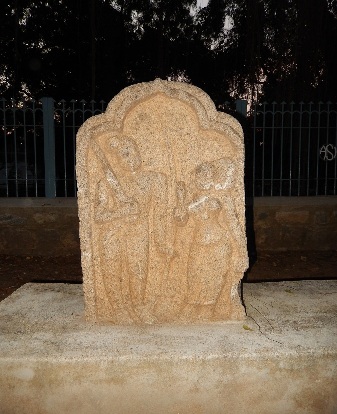
HERO STONE COLLECTION AT DISPLAY IN THE MUSEUM AT VELLORE FORT
Hero stone (Virgal in Kannada, natukal in Tamil) is a memorial commemorating the honorable death of a hero in battle. Erected between the 3rd century BC and the 18th century AD, hero stones are found all over India. They often carry inscriptions displaying a variety of adornments, including bas relief panels, frieze, and figures on carved stone. Usually they are in the form of a stone monument and may have an inscription at the bottom with a narrative of the battle.
This legacy of hero stones was widely prevalent in the entire southern India and even today some rituals resembling the erection of hero stone is being followed. During the thirteenth day ceremony following the demise of a person in the night a stone is erected at home, symbolically, and the next day the stone is let to rest in a water body.
Here are some of the hero stones from Vellore Fort in Tamil Nadu, India
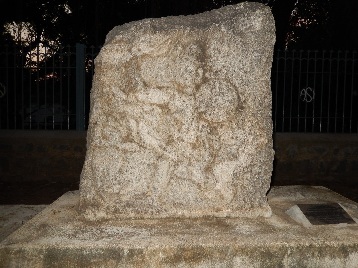
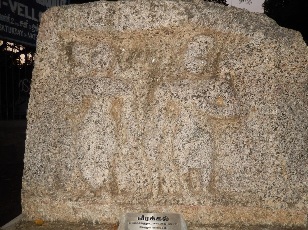
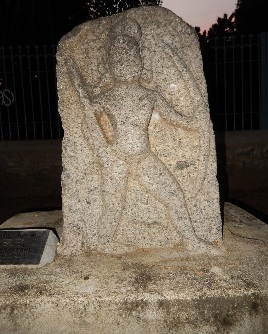
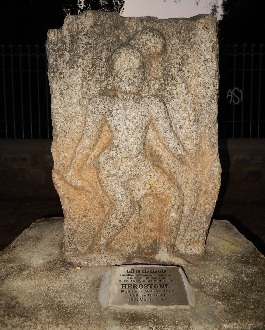
There are a some fine examples of hero stones showcased in the ASI museum at Vellore Fort, Tamil Nadu, India. They are collected from various places in Arcot District. Each one has its own piece of history, a story long forgotten about the heroes who sacrificed their life for the land. In some of the panels the entire family, including the family dog, is shown .
Photos
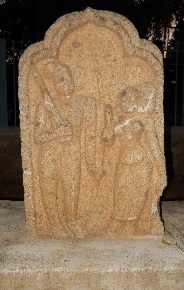
In the panel above the warrior and his wife are depicted.
The man is shown with a sword as well as along bow;
his wife holds a short sword in her hand.
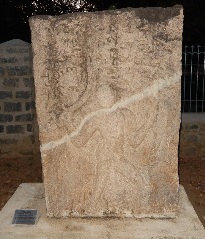
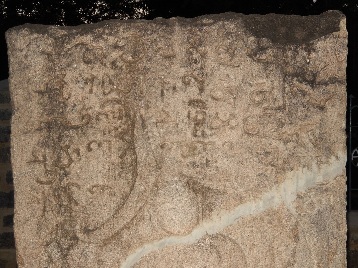
This panel has an inscripition of the way the hero died.
He is seen holding a curved sword in the hand.
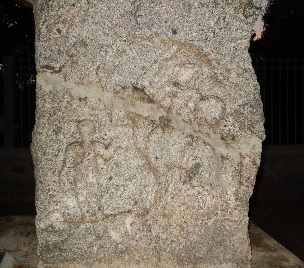
The panel above where a horse borne warrior carrying the sword & shield along with his wallet is shown.
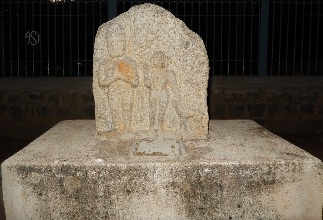
In this panel the hero, his wife and their faithful family dog are shown;
perhaps the canine was their bodyguard.
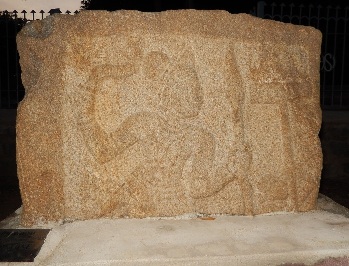
The warrior has a curved short sword and a lancet in hand;
To note the head gear & the ornaments around the neck,
probably he belongs to a royal clan.
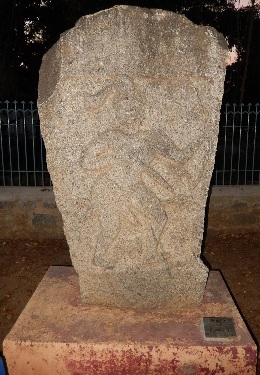
This panel is one of the examples, where the injuries sustained by the warrior are shown.
He suffered multiple injuries while facing the enemy face-to-face.
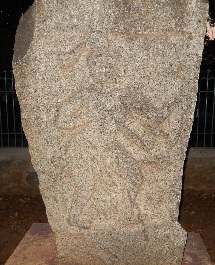
The warrior in the panel adorns a bow and at the same time also carries a sword; the head gear appears unique. There is an arrow in the region of the heart and another one in left thigh of the hero in the panel.
But despite that he is shown maintaining the upright posture.
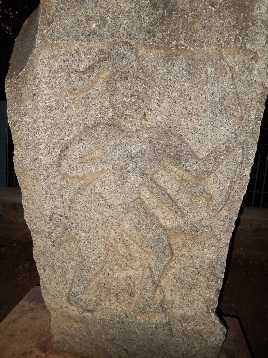
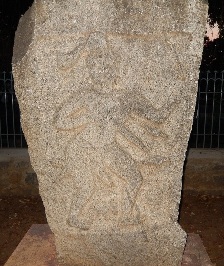
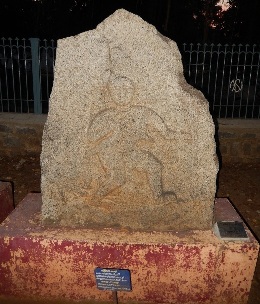
This panel is also unique in several ways. The hero has a bow in one hand and a sword in the other hand.
He had received an arrow in the neck but still shown in a standing posture.
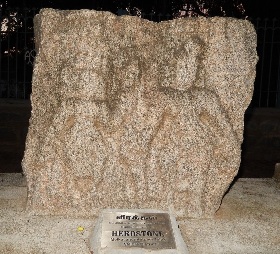

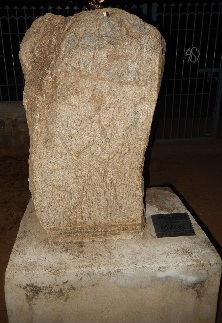
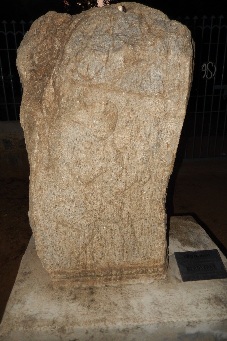


The panel shows the man, his wife and their child.
The man carries a sword in the right hand and a gun in the left hand .
The lady has a short club in her right hand and the child has a bow.
The panel could be from circa 1800 A D, since he is seen carrying a firearm.
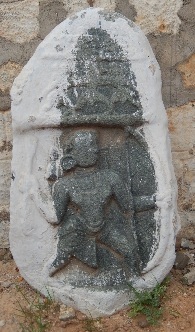
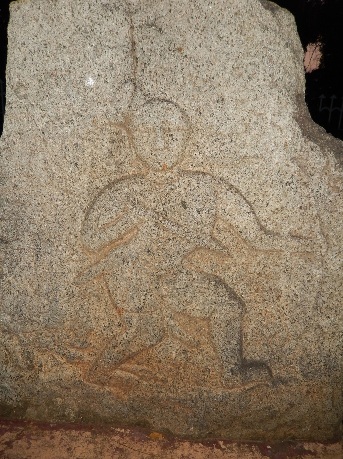
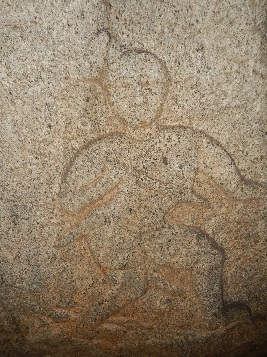
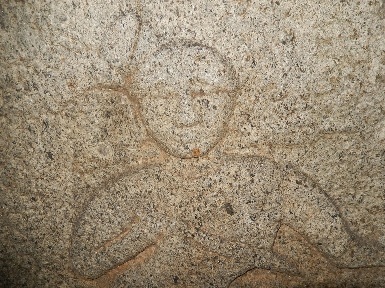
This hero stone is available at Manthralayam opposite to the Siva temple, where the soldier sports a short sword in the waist but uses a bow and arrow. There are also small figurines above the head – probably celestial creatures blessing the fallen hero.
This legacy of hero stones was widely prevalent in the entire southern India and even today some rituals resembling the erection of hero stone is being followed. During the thirteenth day ceremony following the demise of a person in the night a stone is erected at home, symbolically, and the next day the stone is let to rest in a water body.